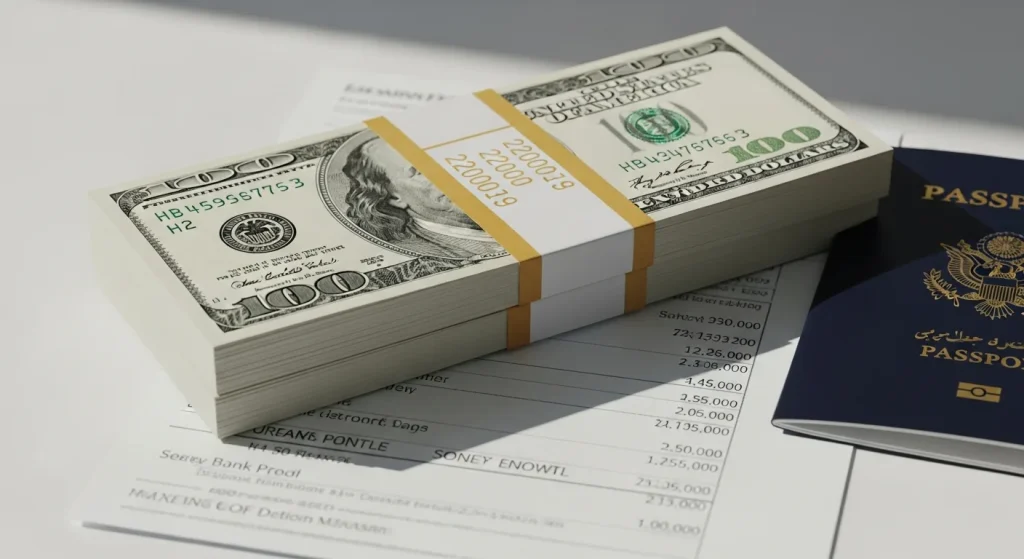
uusd 2000 minimum
financial requirements for an Indonesian visa, particularly for Bali, can often feel like deciphering a complex financial instrument. While many […]
financial requirements for an Indonesian visa, particularly for Bali, can often feel like deciphering a complex financial instrument. While many prospective visitors hear about a “USD 2,000 minimum balance rule,” the reality is more nuanced and less prescriptive than often assumed. This page provides a precise, banking-literate breakdown of what truly constitutes acceptable bali visa proof of funds, drawing directly from Indonesian regulations and practical application. We will clarify the often-misunderstood minimums, detail which financial assets are recognized, highlight critical pitfalls, and explain how Bali Proof of Funds streamlines this essential step for your travel to Indonesia.
Understanding the “Minimum” for Short-Stay Visas
For most short-stay visitors to Bali, including those utilizing a Visa Exemption (Bebas Visa Kunjungan / BVK), e-Visa on Arrival (e-VOA), or standard Visa on Arrival (VOA), specific regulations rarely stipulate an exact numerical bank balance. Instead, the legal framework, such as PP No. 28 Tahun 2019 and Peraturan Menteri Hukum dan HAM (Permenkumham) No. 22 Tahun 2023 on visas and residence permits, refers to a general “guarantee of funds” or the capacity to cover “living expenses” during your stay. This discretionary language empowers immigration officers to assess individual financial readiness rather than adhering to a rigid figure.
For instance, while a VOA costs IDR 500,000 (approximately USD 32-35), this fee is separate from the proof of funds for sustenance. Immigration expects you to demonstrate sufficient financial wherewithal to support yourself for the duration of your intended visit, preventing you from becoming a public charge. For a 30-day tourist stay, this typically implies access to funds that comfortably cover accommodation, food, local transport, and incidental expenses. While not an explicit rule, a healthy account balance well above daily expenditures is always advisable to demonstrate financial stability.
The USD 2,000 Benchmark: Origins and Application for Longer Stays
The widely circulated USD 2,000 figure, while not universally codified for all visa types, has emerged as a practical benchmark, particularly relevant for longer-stay visas or when seeking extensions. For applicants pursuing social-cultural visas, business visas, retirement visas, or even extending a VOA beyond 30 days, immigration authorities often look for a more substantial and verifiable financial guarantee. This benchmark is not typically found in a single, overarching regulation but rather derived from internal guidelines and the interpretation of “sufficient living expenses” for an extended period.
For example, when applying for a social-cultural visa (often requiring a sponsor) or certain limited stay permits (KITAS), the expectation of robust financial backing becomes more pronounced. While the law might use terms like “sufficient funds to cover living costs,” the USD 2,000 (or equivalent in other major currencies) has become an unofficial yet widely accepted minimum threshold to demonstrate this capacity. It serves as a practical indicator of an applicant’s ability to maintain themselves without relying on public assistance, aligning with the broader intent of Indonesian immigration policy. This is particularly crucial for those planning stays beyond 60 days, where financial scrutiny intensifies.
What Financial Assets Count Towards Proof of Funds?
When presenting bali visa proof of funds, the primary criterion is liquidity and accessibility. Immigration authorities prioritize assets that can be readily converted into cash to cover your expenses in Indonesia. Here’s what typically counts:
- Bank Savings and Checking Accounts: These are the most accepted forms of proof. You will generally need to provide official bank statements, often covering the last three months, showing a consistent balance. The funds should ideally be in your name.
- Fixed Deposits (Time Deposits): If mature or easily liquidated without significant penalties, these can sometimes be considered, provided the bank statement clearly indicates the terms and accessibility.
- Investment Accounts: Highly liquid investment accounts (e.g., brokerage accounts holding easily tradable stocks or money market funds) may be accepted, but often with more scrutiny. Documentation proving the current market value and ease of withdrawal is essential.
Conversely, assets that are not readily liquid or easily verifiable typically do not count:
- Real Estate: Property assets, while valuable, cannot be quickly converted to cash for daily expenses.
- Vehicles: Similar to real estate, cars or motorcycles are not considered liquid assets for proof of funds.
- Cryptocurrency: While increasingly popular, the volatility and varying regulatory status of cryptocurrencies mean they are generally not accepted as direct proof of funds.
- Unverified Cash: Physical cash without a clear source or bank record is usually not accepted.
Real-World Scenario: The Illiquid Asset Pitfall
Consider Ms. Anya Sharma, a prospective digital nomad applying for a longer-stay visa. She proudly presented a portfolio statement showing significant equity in a property in her home country, valued at over USD 100,000. While financially secure, her bank account balance for liquid funds was only USD 800. Her application was initially stalled because the immigration officer, exercising discretion, deemed her liquid funds insufficient for immediate living expenses in Bali, despite her overall wealth. This highlights the critical distinction between net worth and readily accessible, liquid funds required for visa purposes.
Beyond the Minimum: Discretion and Practical Considerations
It is crucial to understand that meeting a perceived minimum balance does not guarantee visa approval. As stated in official guidelines, “Immigration officers have wide discretion.” This means an officer can assess your overall financial situation, travel plans, and perceived risk profile, potentially requesting more proof of funds than a baseline figure. The goal is to ensure you will not become a burden on the state and that your visit aligns with your visa type.
Practical considerations often dictate presenting more than the bare minimum. Bali’s cost of living, especially for tourists, can fluctuate significantly depending on lifestyle choices. A higher balance provides a stronger assurance of your ability to cover unexpected expenses, medical emergencies, or extended stays if approved. Furthermore, a clear, well-planned itinerary, along with a confirmed return or onward ticket, can serve as supplementary evidence of your financial prudence and genuine intent to comply with visa regulations. For comprehensive support, you might want to see our Long-Stay Visa Support page.
Common Mistakes to Avoid
proof of funds requirement can be tricky. Avoid these common pitfalls to ensure a smoother visa application process:
- Presenting Non-Liquid Assets: As discussed, assets like real estate or vehicles, while valuable, are not considered suitable proof of funds. Immigration seeks immediate financial capacity.
- Insufficient Funds for Actual Stay: Even if you meet a general minimum, ensure your balance realistically covers your planned expenses for the entire duration of your intended stay, not just the initial period.
- Outdated or Incomplete Statements: Always provide the most recent bank statements, typically covering the last three months, and ensure they are officially stamped or verified by your bank.
- Sudden Large Deposits: Funds that appear suddenly in your account without a clear, explainable source (e.g., a recent salary, property sale proceeds) can raise red flags for money laundering, leading to scrutiny or rejection.
- No Clear Travel Plan or Return Ticket: While not direct proof of funds, the absence of a confirmed return ticket or a vague itinerary can signal a lack of genuine intent, impacting the immigration officer’s assessment of your financial preparedness.
- Underestimating Discretion: Relying solely on a perceived minimum without considering the immigration officer’s discretion can lead to unexpected requests for additional proof or even rejection.
How Bali Proof of Funds Helps
At Bali Proof of Funds, we understand the complexities and nuances of Indonesian visa regulations. Our expertise lies in demystifying the requirements for bali visa proof of funds, ensuring your application is not just compliant but robust. We provide tailored guidance on what financial documents are needed, which assets qualify, and how to present them effectively to meet the discretionary standards of Indonesian immigration authorities. Whether you are applying for a short-term tourist visa or a longer-stay permit, our service minimizes the risk of delays or rejections due to insufficient or improperly presented financial evidence. We act as your financial liaison, offering peace of mind so you can focus on planning your Bali adventure. Explore our full range of services on our homepage, or learn more about specific visa types on our Bali Visa Requirements Guide.
Ready to Apply?
Don’t let the intricacies of financial documentation deter your Bali plans. The USD 2,000 minimum balance rule, while a useful guideline, requires expert interpretation to ensure full compliance. Our team is ready to provide the precise, up-to-date advice you need to confidently demonstrate your financial capacity for your Indonesian visa application. Avoid common pitfalls and unnecessary stress by leveraging our specialized knowledge.
Contact us today for personalized assistance:
- WhatsApp: +62 811-2859-0000
- Email: [email protected]
Let Bali Proof of Funds be your trusted partner in securing your seamless entry into Indonesia.