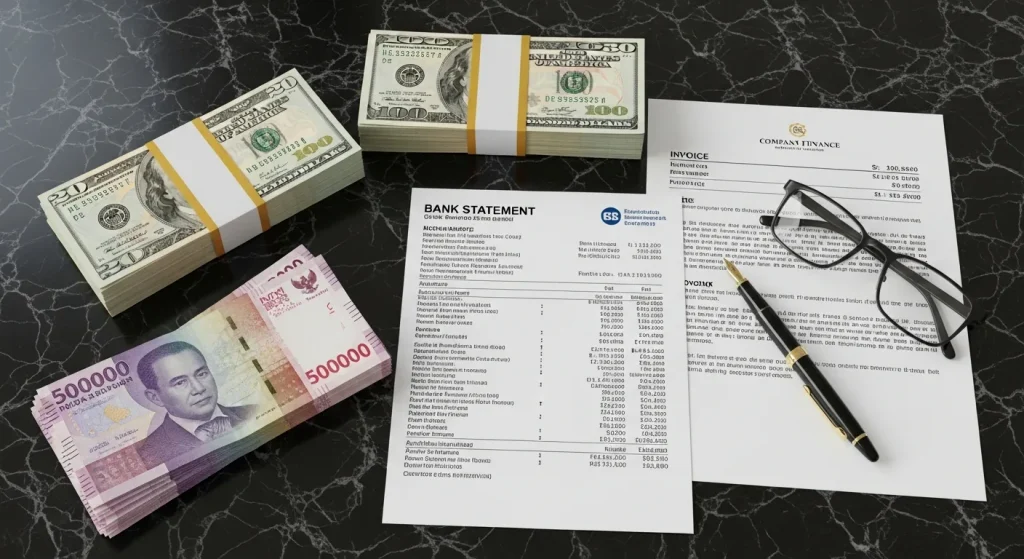
uproof of funds overview
Bali Visa Proof of Funds Requirement 2026 financial prerequisites for a Bali visa in 2026 demands a precise understanding of […]
Bali Visa Proof of Funds Requirement 2026
financial prerequisites for a Bali visa in 2026 demands a precise understanding of Indonesian immigration regulations. As the global economic landscape evolves, so too do the expectations for demonstrating financial solvency for international travel. This comprehensive overview from Bali Proof of Funds dissects the official rules, processing requirements, and associated costs, with a particular emphasis on tourist and longer-stay visas. Our analysis draws directly from official Indonesian sources, providing clarity on the often-ambiguous “proof of funds” criteria. It is crucial to remember that while regulations provide a framework, immigration officers retain significant discretion, often seeking evidence beyond stated minimums to ensure visitors can comfortably sustain their stay without becoming a public charge.
The Foundational Principles of Bali Visa Proof of Funds
The core principle underpinning Bali’s visa proof of funds requirement is the applicant’s demonstrated ability to cover “living expenses” and provide a “guarantee of funds” for their intended duration of stay. This is codified within foundational regulations such as PP No. 28 Tahun 2019 and further elaborated in Peraturan Menteri Hukum dan HAM (Permenkumham) No. 22 Tahun 2023 concerning visas and residence permits. These legal instruments stipulate that visitors must not only possess sufficient funds for daily sustenance and accommodation but also for their return journey or onward travel.
While an exact numerical “bank balance” is rarely specified by law, the intent is clear: to prevent visitors from facing financial hardship or engaging in unauthorized work. The discretion of immigration officers means that the perceived sufficiency of funds can be subjective. Consequently, applicants should prepare documentation that robustly supports their financial capacity, typically bank statements, and potentially supplementary financial instruments.
Short-Stay Tourism Visas: Requirements and Expectations
For the majority of Bali holidaymakers, short-stay options include the Visa Exemption (BVK), Visa on Arrival (VOA), and e-VOA, typically permitting stays of up to 30 days. While these categories generally involve less stringent explicit financial checks than longer-term visas, the underlying principle of sufficient funds always applies.
- Visa Exemption (Bebas Visa Kunjungan / BVK): Available to specific nationalities listed by the Indonesian Government under PP No. 28 Tahun 2019. It is free, allows a stay of up to 30 days, and is not extendable. Proof of funds is rarely explicitly requested at entry, but officers maintain the right to inquire.
- Visa on Arrival (VOA) / Visa Kunjungan Saat Kedatangan (B1): Governed by PP No. 28 Tahun 2019 and Permenkumham No. 22 Tahun 2023. The fee is IDR 500,000 (approximately USD 32-35), as per PP No. 28 Tahun 2019 jo. PP No. 26 Tahun 2022. This visa permits a 30-day stay, extendable once for another 30 days. While no specific bank balance is mandated, a common expectation among immigration officials is proof of approximately USD 1,000 to USD 2,000 for a 30-day visit, or roughly USD 100 per day, to cover basic living expenses and accommodation.
For both BVK and VOA/e-VOA, demonstrating a valid return ticket or onward travel ticket is often considered sufficient indirect proof of financial stability, alongside a credible travel itinerary. However, carrying recent bank statements is a prudent measure.
Longer-Stay Visas (B211A) and Enhanced Financial Scrutiny
For individuals planning extended stays in Bali, such as those utilizing the B211A Tourist/Social Visa (typically 60 days, extendable twice for 60 days each), financial scrutiny significantly increases. The expectation for proof of funds aligns more closely with the “guarantee of funds” principle, requiring more substantial and clearly documented financial capacity.
While Permenkumham No. 22 Tahun 2023 provides the legal framework, specific numerical thresholds are often implied rather than explicitly stated. Common practice dictates applicants present bank statements demonstrating a minimum balance of approximately USD 1,500 to USD 2,000 per month of intended stay. For a six-month stay, this could translate to a lump sum of USD 9,000 to USD 12,000. These figures are not regulatory minimums but rather established benchmarks for demonstrating adequate financial self-sufficiency.
Case Study: Sarah’s B211A Application
Sarah, a freelance digital marketer, applied for a B211A visa for a 3-month stay. Her initial bank statement showed a balance of exactly USD 4,500, meeting the implied USD 1,500/month threshold. During her visa interview, the immigration officer questioned if this was genuinely sufficient given potential unforeseen expenses. Proactively, Sarah presented additional documentation: a confirmed return flight booking, pre-paid accommodation for her first month, and a letter from her primary client detailing upcoming project payments. This comprehensive approach, exceeding just the minimum bank balance, satisfied the officer, and her visa was approved. This scenario underscores the value of robust, multifaceted financial evidence.
Acceptable Forms of Proof and Sponsorship
Presenting clear, verifiable financial documentation is paramount. The primary acceptable form of proof of funds is a recent bank statement. This statement should be:
- From a reputable financial institution.
- Dated within 7-14 days of your visa application submission.
- Showing sufficient liquid funds in a checking or savings account.
- In English, or accompanied by a certified English translation if in another language.
- Clearly display the account holder’s name, account number, and current balance.
Supplementary evidence can include credit card statements showing available credit, investment account summaries (only if funds are readily accessible), or traveler’s checks. However, these are generally not accepted as primary proof without accompanying bank statements.
For applicants who